
The best agents don’t know the world, they know you and help you navigate it. Today, at YepAI we’re answering a top user request: how to help you turn sales 24/7 without you actually being online answering personal queries at night.
Most Shopify store owners don’t have a traffic problem. Sometimes, they have a conversion problem or worse—both.
A few weeks ago, one of our early users was running paid ads for a product launch. Traffic looked great on paper and clicks were coming in, sessions were rising, but revenue barely moved.
Does this also sound familiar?
They didn’t need more tools. They needed something that could connect the dots between traffic and conversion. This marks our next step toward making our YepAI Agents more personal, proactive, and powerful to help you in converting sales.
YepAI is evolving beyond a chatbot into a system of specialised AI agents designed to actively drive growth across your store. While earlier versions focused on conversational support, this next phase introduces agents that don’t just respond—they take action across your entire marketing and conversion workflow.
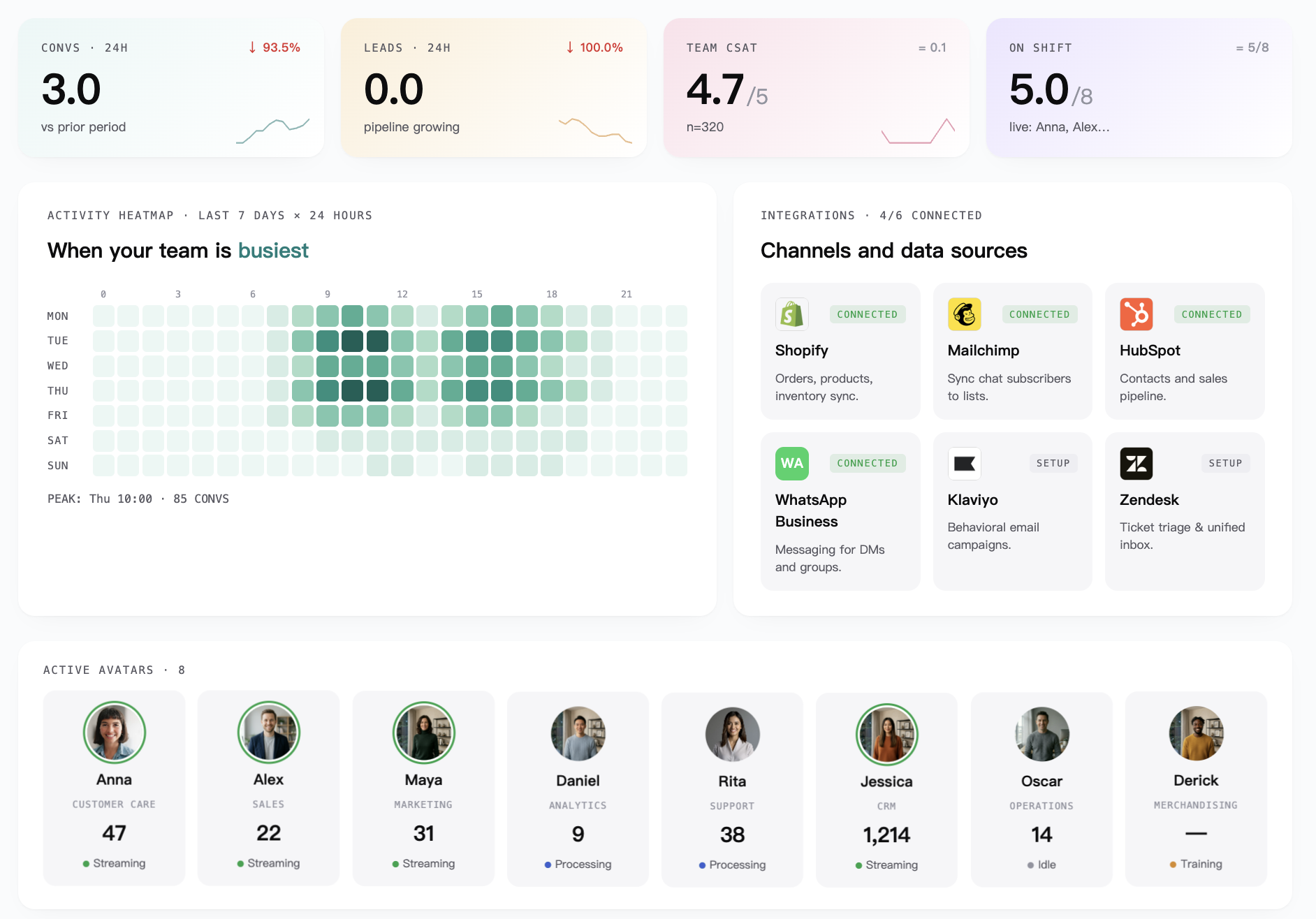
Behind the scenes, YepAI is powered by seven specialized agents designed to support every facet of your e-commerce operations:

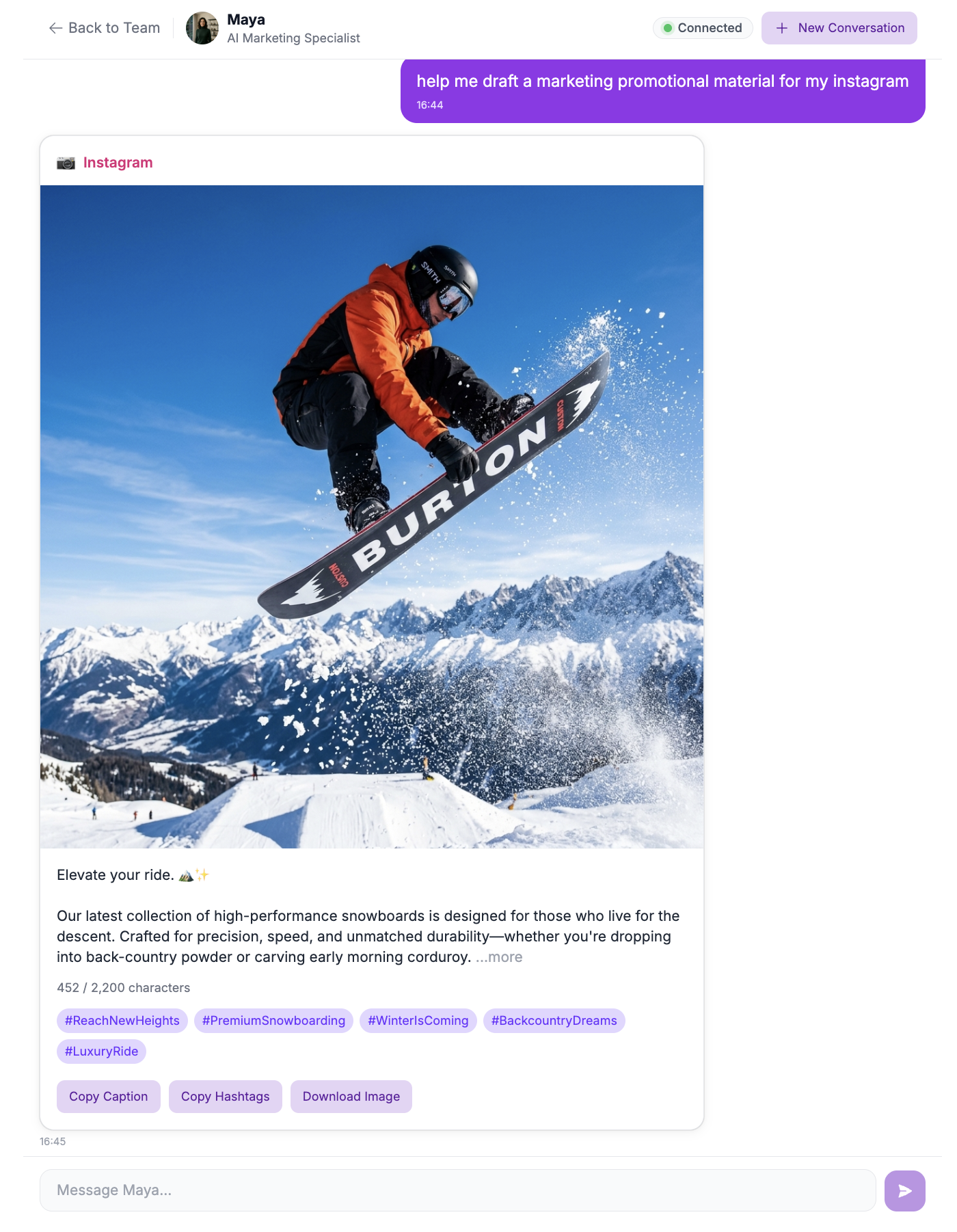
Take a closer look of how Maya AI agent helps businesses in their contents.
As part of this evolution, we’re now taking the next step by introducing two new agents focused on the most critical areas of growth: acquisition and conversion.
We are proudly to present our two new members from your AI Agent Team:
We made them to help you in your Shopify store to be uniquely helpful as one drives traffic, on the other hand, one turns it into revenue. Because we know getting visitors is easy, but getting them to buy is not.
Leo has two core strengths: continuous performance optimisation and automated experimentation at scale. It doesn’t just run ads, it learns what works, reallocates budget instantly, and improves results over time.
Since activating Leo, managing ad campaigns feels completely different.
For example, during a recent product launch, we were driving traffic through both Meta and Google Ads. Clicks were coming in, but performance was inconsistent, some campaigns were working, others were quietly burning budget. Normally, this would mean hours of manual adjustments: checking metrics, pausing ads, testing new creatives. Instead, Leo handled it.
It analyses campaign performance across platforms, identified which audiences were converting, and automatically shifted budget toward the highest-performing segments. At the same time, it tested multiple creatives and headlines, figuring out which messaging actually drove clicks and engagement.
By the time we checked back in, underperforming ads had already been deprioritized, and the strongest campaigns were scaled. Just like that, the campaigns weren’t just running, they were improving.
Same goes with Jennie, it also has two core strengths: conversion optimisation and behaviour-driven analysis. It identifies where customers drop off and continuously improves the buying experience to increase conversions.
After Leo brought in higher-quality traffic, the next challenge became obvious: visitors were landing, but not all of them were buying. This is where Jennie stepped in.
Looking at the same product launch, Jennie analysed how users were interacting with the store. It quickly identified customer journey’s points like when users are hesitating on product pages, abandoning carts at checkout, and dropping off before completing purchases.
Instead of guessing what to fix, Jennie provided clear, actionable improvements. It suggested changes to product page layouts, refined messaging, and optimised the checkout flow. It then ran A/B tests to validate what actually worked while removing assumptions from the process entirely. Over time, those small improvements compounded.
Visitors who would have left… started converting. Carts that would have been abandoned… turned into completed purchases. What used to feel like guesswork became a system that continuously improves itself. Just like that, we were set.
We built YEPAI agents with one principle in mind: power without loss of control. Leo and Jennie are designed to work on your store’s data, from ad performance to customer behaviour, but only in ways that are transparent, configurable, and aligned with your goals.
You decide how they operate, whether that means setting budgets, defining constraints, or choosing which actions are automated versus reviewed. Nothing runs blindly, and everything works within boundaries you define.
When they are activated, Leo and Jennie analyse your store and marketing data in real time. Leo operates across your ad platforms, continuously optimising campaigns, testing creatives, and reallocating budget based on performance. Meanwhile, Jennie works within your storefront experience, identifying where users drop off, analysing behaviour patterns, and improving conversion flows. Together, they don’t just generate insights, they take action, adapting dynamically as performance data evolves rather than relying on rigid and pre-set rules.
You also won’t have to guess what’s happening behind the scenes. YepAI agents are built with transparency at their core, showing what changes are being made and why they’re being made. If something doesn’t look right, you can step in at any time, adjust the direction, or roll changes back. You can also choose to test variations manually, giving you full flexibility over how much control you want to retain.
At the same time, we’ve built guardrails to ensure performance improvements don’t come at unnecessary risk. Leo and Jennie operate within defined limits, whether that’s budget caps, performance thresholds, or controlled testing environments. This ensures that optimisation is always measured, deliberate, and aligned with your business goals.
Your data also remains entirely under your control. YepAI agents use your Shopify, advertising, and customer data to improve outcomes within your store, but that data isn’t used beyond your environment. You can disconnect integrations, adjust permissions, or stop agents at any time. In short, the system learns how to improve your performance, it doesn’t take ownership of your business data.
In practice, this means that during a product launch, Leo can optimise campaigns in real time while staying within your budget limits, and Jennie can test and improve conversion flows through controlled experiments. Every change is visible, measurable, and reversible. In short, you’re not handing over your store, you’re augmenting it with a system that works alongside you.
Our goal is simple: to give you the performance of a full team, without sacrificing visibility, control, or trust.
Starting today, YepAI is rolling out to selected Shopify stores as part of our early access release. We’re beginning with a limited group to ensure performance, gather feedback, and refine how our AI agents operate in real-world e-commerce environments.
Once enabled, YepAI integrates directly with your Shopify store and connected marketing channels, giving you access to our full suite of AI agents. Together, these agents help analyse performance data, support customer interactions, optimise campaigns, improve conversion flows, and strengthen day-to-day store operations in real time. Setup is designed to be fast and straightforward, with no complex configurations or technical setup required.
If you have access, getting started takes just a few steps:
From there, YepAI continuously analyses performance, supports key workflows, and helps optimise your store automatically.
Register now to join the waitlist in securing your spot in the next rollout, and be among the first to deploy YepAI’s newest AI agents in your store!